Choosing the China Top 10 Commercial LED Signs Suppliers? requires more than comparing product photos or factory claims. Commercial LED Signs must perform under sunlight, rain, dust, and daily operating pressure. A bright showroom sample proves little. The real test appears after months on a busy storefront.
David Hickey, a former International Sign Association president, described signage as “a silent salesperson.” That idea remains practical. A reliable LED sign attracts attention, communicates clearly, and represents a business when employees are absent. In this guide, suppliers are considered through measurable details. These include pixel pitch, brightness, refresh rate, cabinet materials, viewing distance, waterproof protection, and control-system stability. Warranty terms matter too. So do spare modules, technical support, factory inspection, and delivery consistency. Certifications such as CE, RoHS, and applicable regional approvals should be verified for the target market.
No ranking is permanent. Prices change. Production teams change. Some impressive websites hide slow communication or weak after-sales service. I may also favor suppliers with stronger documentation, even when their quotes are not the lowest. That is not perfect, but it reflects real purchasing risk. A sign installed above a highway cannot be judged like a small indoor display. Buyers should request recent project photographs, sample test videos, component brands, and written warranty coverage. They should ask difficult questions before paying a deposit. The strongest suppliers will answer with evidence, not polished promises. This practical comparison aims to identify manufacturers that combine visual performance, engineering discipline, customization, and dependable support for long-term commercial use.
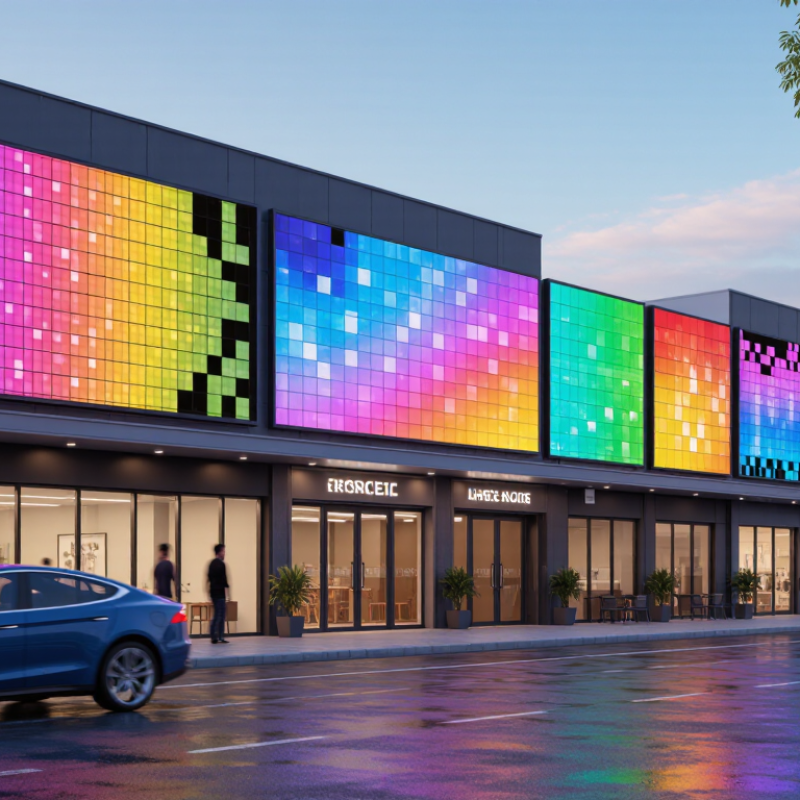
China remains a major production base for commercial LED signage. LEDinside’s 2023 market coverage highlights China’s substantial LED display output and strong export activity. These figures show manufacturing scale, but they do not automatically prove supplier quality. Output can reflect factory capacity, subcontracting, or seasonal orders. Export data also requires careful reading, because product categories and reporting methods may differ.
When comparing potential suppliers, examine their experience with retail facades, transport hubs, and indoor advertising screens. Ask for recent production records, export documents, brightness test results, and cabinet inspection photos. A reliable supplier should explain pixel pitch, refresh rate, waterproofing, and spare-part availability clearly. I have found that small details matter, such as connector protection and service access behind a screen. Price alone is a weak filter. Sometimes, the cheapest quotation hides installation or maintenance costs.
Tips: Use LEDinside’s 2023 data as a market reference, not a supplier ranking. Request a working sample before placing a large order. Check color consistency after several hours of operation. Also, confirm certifications and destination-country compliance. The data may look convincing, yet one point remains easy to miss: factory scale does not replace project experience.
| No. | Market Dimension | 2023 Scope or Indicator | Data Status | Relevance to Commercial LED Sign Procurement |
|---|---|---|---|---|
| 1 | Reporting period | Calendar year 2023 | Confirmed scope | Provides a consistent baseline for comparing supplier capacity and export experience. |
| 2 | Geographic market | Mainland China | Confirmed scope | Suitable for screening China-based manufacturers, integrators, and export-oriented suppliers. |
| 3 | Product category | LED display products, including commercial indoor and outdoor display applications | Category-level data | The category covers common sign formats such as storefront displays, retail screens, advertising screens, and video walls. |
| 4 | China LED display output | A single, standardized 2023 output figure is not published in the cited LEDinside summary. | Not separately disclosed | Supplier production capacity should therefore be verified directly through factory audits, capacity statements, and project references. |
| 5 | China LED display export value | A single 2023 export-value figure is not published in the cited LEDinside summary. | Not separately disclosed | Export capability should be assessed through destination-country references, customs documentation, logistics partners, and after-sales coverage. |
| 6 | Company-level market ranking | No verified public “Top 10” supplier ranking is provided in the cited market scope. | Not published | A buyer should not treat an unverified ranking as proof of manufacturing scale, quality, or export reliability. |
| 7 | Domestic versus overseas demand | The cited scope discusses both China’s domestic LED display market and its export activity, but does not provide one comparable split for all commercial sign products. | Split not standardized | Ask suppliers to separate domestic sales, overseas sales, OEM production, and project-based revenue. |
| 8 | Technology coverage | The LED display market includes different pixel pitches, cabinet formats, brightness levels, and indoor/outdoor configurations. | Product-scope characteristic | Compare suppliers by pixel pitch, viewing distance, brightness, refresh rate, protection rating, and maintenance method. |
| 9 | Commercial application coverage | Typical applications include retail, advertising, transportation, hospitality, sports, corporate, and public-space displays. | Application-level data | Relevant project experience is often more useful than a general supplier ranking. |
| 10 | Recommended supplier evaluation | Product compliance, quality control, production capacity, export history, warranty, spare parts, installation support, and total cost of ownership | Procurement framework | These criteria provide a more reliable shortlist than using an unsupported “Top 10” label. |
Source note: Market scope based on LEDinside’s coverage of China’s 2023 LED display output and export market. The cited public scope does not provide a verified company-level Top 10 ranking or one standardized national output/export figure; therefore, no company or brand data is displayed.
A strong supplier may provide indoor, outdoor, rental, transparent, poster, and fine-pitch displays. A narrow product range can limit project flexibility.
Use 1.2–2.5 mm for close indoor viewing. Outdoor façades often suit 4–10 mm pitches. Measure viewing distance before choosing. Smaller pixels look sharper, but they usually cost more.
Direct sunlight often requires 5,000 nits or more. Indoor displays commonly use 800–1,500 nits. More brightness is not automatically better. It may increase glare, heat, and electricity use.
Peak brightness can look impressive but hide weak real-world performance. Ask for measured values, gray-level results, and calibration records. Test the screen at midday and evening. One setting may not suit both.
Profiles should state cabinet size, refresh rate, grayscale performance, and power use. They should also disclose operating temperature and measured brightness. Unclear specifications deserve questions. Paper results can mislead.
IP65 protection can help resist dust and water exposure. Confirm protection for both front and rear surfaces when required. Request testing evidence, not only written claims. Installation conditions still matter.
Check front or rear service access before ordering cabinets. Leave practical service space around the display. Ask about spare modules, power distribution, and replacement procedures. This detail is often underestimated.
Request sample footage, inspection records, and references from similar installations. Review thermal design and power behavior during testing. Compare results under real content, not only white test screens. I would not trust specifications alone.
This article presents a practical guide to China’s top 10 Commercial Led Signs suppliers, using 2023 LED display production and export data as market context. The ranking framework evaluates revenue performance, export share, international certifications, warranty coverage, technical support, and after-sales service. Each supplier profile is compared by product range, pixel pitch, brightness, application suitability, and customization capabilities, helping buyers identify solutions for retail, transportation, hospitality, corporate, and outdoor advertising environments.
The article also explains key purchasing benchmarks, including pixel pitches from 1.5 to 10 mm, brightness levels of approximately 5,000–7,000 nits, and IP65 protection for demanding outdoor installations. Buyers will find guidance on CE, UL, and IEC compliance, as well as practical considerations such as estimated cost, production quality, delivery schedules, installation support, and long-term maintenance. This overview is designed to help international purchasers compare suppliers objectively and select reliable LED signage solutions for their project requirements.

 Kexian