Top 10 Types of Business Logo Wall Signs?

Time:2026-09-23 Author:Henry
0%

A business sign often speaks before a salesperson does. Business Logo Wall Signs turn blank exterior walls into recognizable points of contact, helping customers identify a company from the street, lobby, or reception desk. Their impact depends on more than appearance. Scale, contrast, viewing distance, lighting, materials, and installation quality all shape how clearly a logo performs.

Industry research supports this practical value. A FedEx Office-commissioned consumer survey reported that 8 in 10 shoppers had entered a store because of an appealing sign. The same study found that 68% had made a purchase after noticing business signage. These findings are older, so they should not be treated as universal proof. Still, they reveal an important pattern: visible identification can influence physical customer behavior. The Sign Research Foundation also emphasizes that effective signs improve wayfinding and support commercial visibility. Details matter.

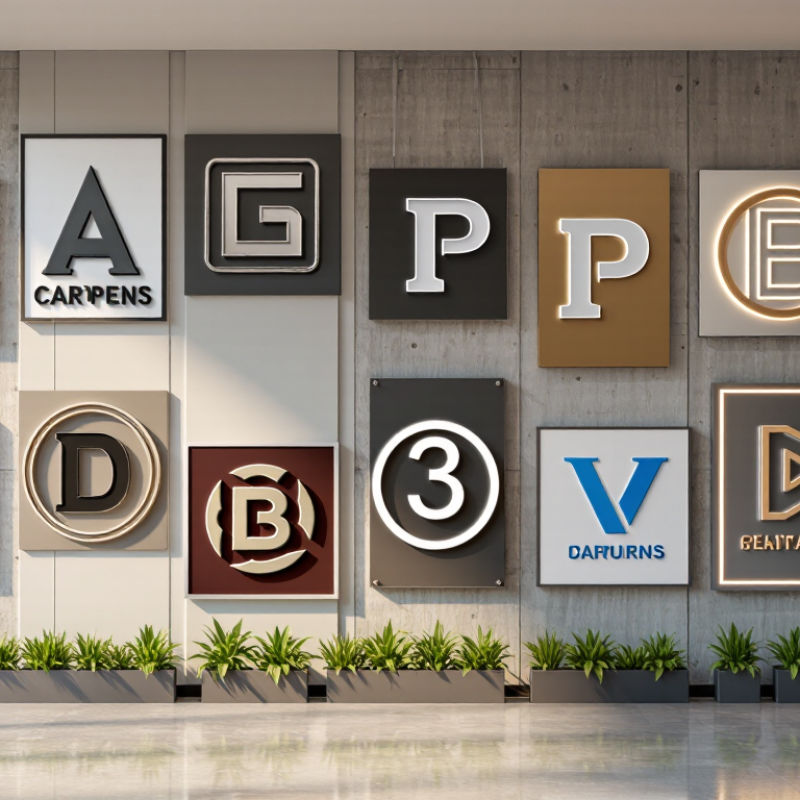
This guide explores the Top 10 Types of Business Logo Wall Signs, from dimensional letters and acrylic plaques to illuminated channel letters and metal logo panels. Each option creates a different impression. Brushed aluminum can suggest precision, while warm halo lighting may feel more welcoming. A poor installation can weaken even an excellent logo. It happens. Therefore, the selection process should consider brand identity, wall structure, maintenance, energy use, viewing conditions, and local sign requirements. Reliable decisions come from combining design evidence with site experience, not chasing the most dramatic finish.
Top 10 Types of Business Logo Wall Signs?

Dimensional Letter and Cut Metal Logo Wall Signs

Dimensional letter and cut metal logo wall signs give a business facade depth, shadow, and a stronger street presence. Raised acrylic, aluminum, stainless steel, or painted metal letters can create different visual impressions. Brushed metal feels precise, while powder-coated steel can appear warmer and more architectural. The Sign Research Foundation reports that on-premise signs can influence many purchasing decisions, especially when visibility and readability are strong. A national consumer signage survey also found that 68% of people judge a business by its sign quality.

Installation details matter as much as the logo design. A three-inch standoff can create sharp afternoon shadows on a textured wall. However, excessive depth may look awkward on narrow facades. Cut metal logos also need clean edges, proper fasteners, and finishes suited to moisture and sunlight. I once underestimated wall color; a beautiful silver logo nearly disappeared against a pale exterior. Contrast should be tested outdoors, not only on a screen. This is an easy step to skip.

Tips: Check the logo from the sidewalk, parking area, and passing traffic. Use full-scale templates before drilling. Confirm letter spacing at night if illumination is planned. Allow room for imperfect masonry, because walls are rarely perfectly level. Photograph the sign in different weather before approving the final finish.

Channel Letter and Halo-Lit Logo Wall Signs

Among the top ten types of business logo wall signs, channel letter and halo-lit designs deserve close attention. Channel letters use individually shaped letters, often with acrylic faces and internal LEDs. They create a bright, direct message above entrances, reception desks, and retail façades. From my installation experience, readable contrast matters more than excessive brightness. A white letter on a charcoal wall can remain clear at dusk without looking harsh. Keep spacing generous. Crowded letters reduce recognition.

Halo-lit logo signs work differently. LEDs sit behind the solid letters, casting a soft glow onto the wall. This reverse illumination produces a refined outline, especially on textured stone, painted concrete, or dark metal panels. A two-inch gap between the letter and wall can create a clean light wash, but the effect depends on surface color and mounting depth. Designers should inspect the sign after sunset, not only on a screen. Reflections from glass can change its appearance.

Channel letters suit businesses needing strong distance visibility. Halo-lit signs often fit offices, hotels, studios, and premium interiors. Both options require careful wiring, weather protection, secure anchors, and accessible maintenance points. Installation records, material specifications, and lighting tests improve reliability. One practical warning: a beautiful mockup may fail under uneven walls or nearby street lighting. I have seen small mounting errors become obvious at night. Rechecking alignment feels slow, yet it prevents expensive corrections and keeps the logo credible.

Lightbox and Cabinet Logo Wall Signs

Lightbox and cabinet logo wall signs remain practical choices among the top business logo wall signs. A lightbox uses internal illumination to make a logo visible after sunset. A cabinet sign places the artwork inside a deeper, enclosed housing. Both create a clean storefront marker, especially above entrances, reception desks, and exterior walls.

A 2012 U.S. consumer signage survey reported that 76% of people had entered a business because its sign attracted attention. The same research found that 68% associated sign quality with business quality. Those figures show why logo presentation deserves more than decorative treatment. Choose acrylic faces for smooth, even light. Use aluminum cabinets for stronger outdoor protection. LED modules usually reduce heat and maintenance compared with older lighting systems, but poor spacing can still create dark spots. Brightness is not always better. I have seen attractive signs become uncomfortable at night.

Tips: Match the sign depth to the wall scale. Keep the logo readable from the normal approach distance. Ask for a nighttime illumination test before final approval. Check mounting strength, drainage, cable access, and service clearance. The International Sign Association’s industry research also emphasizes installation, maintenance, and local visibility as major factors in sign performance. A cabinet may look economical at first, yet difficult access can increase future service costs. Review the whole lifecycle, not only the purchase price.

Top 10 Types of Business Logo Wall Signs? - Lightbox and Cabinet Logo Wall Signs
Rank Logo Wall Sign Type Basic Construction Illumination Typical Depth Visibility Profile Common Applications Maintenance Level Relative Cost
1 Front-Lit Channel Letters Individual three-dimensional letters with aluminum returns and translucent acrylic faces. Internal LED modules illuminate the letter faces. Approximately 75–150 mm High, day and night Retail storefronts, offices, shopping centers, and reception areas. Low; occasional face cleaning and LED inspection. Medium–High
2 Front-Lit Logo Cabinet Fabricated aluminum or steel cabinet with a printed or translucent front panel. Internal LED illumination behind the face. Approximately 100–250 mm High and evenly distributed Large logo displays, building entrances, commercial interiors, and exterior walls. Low–Medium; panel, seal, and electrical checks may be required. Medium
3 Halo-Lit Channel Letters Opaque metal or acrylic letters mounted slightly away from the wall. LED light projects backward to create an indirect halo effect. Approximately 50–125 mm plus wall offset High at night; subtle by day Corporate offices, hotels, professional practices, and premium interiors. Low; keep the wall gap clear of dust and debris. Medium–High
4 Front-and-Halo-Lit Letters Three-dimensional letters combining a translucent face with an opaque or semi-opaque return. LEDs illuminate both the front face and the rear halo. Approximately 75–150 mm plus wall offset Very high, especially after dark High-traffic entrances, hospitality venues, showrooms, and landmark walls. Low–Medium; requires access to both face and rear lighting components. High
5 Flat Panel Lightbox Sign Shallow rectangular enclosure with an acrylic, polycarbonate, or fabric graphic face. Edge-lit or backlit LED system. Approximately 50–150 mm High and consistent Indoor directories, reception logos, retail walls, and tenant identification. Low; clean the graphic face and inspect the power supply. Low–Medium
6 Double-Sided Projecting Lightbox Two illuminated faces supported by a wall-mounted bracket or perpendicular arm. Internal LED illumination visible from two directions. Approximately 100–250 mm Very high from approaching foot traffic Street-facing shops, pedestrian areas, building corners, and directional branding. Medium; inspect brackets, seals, faces, and electrical connections. Medium–High
7 Push-Through Acrylic Cabinet Sign Opaque cabinet face with raised translucent acrylic lettering pushed through cut-outs. LED backlighting illuminates the raised lettering. Approximately 100–200 mm High contrast and strong depth Office lobbies, financial services, medical facilities, and institutional interiors. Low; clean raised letters and inspect LED components. Medium–High
8 Acrylic Face Cabinet Logo Custom-shaped or rectangular cabinet fitted with a printed, translucent, or digitally applied acrylic face. Uniform internal LED backlighting. Approximately 75–200 mm High, with broad graphic coverage Large wall logos, visitor centers, commercial interiors, and branded feature walls. Low–Medium; acrylic faces should be cleaned with non-abrasive products. Medium
9 Edge-Lit Acrylic Logo Panel Laser-cut or printed acrylic panel with polished edges and a concealed mounting system. LEDs illuminate the acrylic from its edges, producing a glowing outline or graphic. Approximately 10–30 mm Medium–High in dim or controlled lighting Reception desks, interior feature walls, restaurants, salons, and creative workspaces. Low; protect the acrylic from scratches and harsh chemicals. Low–Medium
10 Non-Illuminated 3D Logo Letters Raised letters or logo shapes made from acrylic, metal, PVC, wood, or composite materials. None; relies on ambient or architectural lighting. Approximately 10–75 mm Medium by day; dependent on lighting Interior offices, reception walls, retail displays, and areas without nighttime viewing needs. Low; dusting and surface cleaning are generally sufficient. Low–Medium

Acrylic Panel and Printed Vinyl Logo Wall Signs

Acrylic Panel and Printed Vinyl Logo Wall Signs

Acrylic panel logo wall signs create a clean, dimensional appearance in reception areas, corridors, and retail interiors. Clear acrylic can float above a painted wall, while colored acrylic gives stronger contrast. Printed vinyl works differently. It applies graphics, gradients, textures, or small details directly to acrylic, PVC, glass, or painted surfaces. This flexibility helps businesses match changing campaigns without replacing the entire sign.

A widely cited FedEx Office consumer survey found that 76% of respondents entered a business because its sign attracted attention. The same research reported that 68% made a purchase after seeing an appealing sign. These figures support careful visual planning, not oversized decoration. The Sign Research Foundation also identifies contrast, viewing distance, and letter legibility as key sign-performance factors. A glossy acrylic panel may look impressive up close but become difficult to read under ceiling glare. That mistake is easy to miss.

Material selection needs practical judgment. Use thicker acrylic for larger panels, concealed spacers for depth, and matte vinyl where reflections are strong. Printed vinyl can reproduce fine artwork, but edges may lift on dusty or uneven walls. Clean installation matters. Very much. Before production, check wall condition, lighting direction, logo proportions, and the viewer’s normal approach. The International Sign Association recommends evaluating signs within their real viewing environment, rather than judging artwork only on a computer screen. That advice seems obvious, yet many projects still overlook it.

Projecting and Backlit Plaque Logo Wall Signs

Projecting and Backlit Plaque Logo Wall Signs

Projecting sign extends from the wall, making the logo readable from approaching sidewalks. A backlit plaque creates a softer glow around raised letters or a solid face. Used together, they can guide visitors without overwhelming the building.

In my sign installation experience, placement matters more than size. A projecting sign should clear doors, awnings, and pedestrian paths. Its bracket must match the wall structure, not just the exterior finish. For backlit plaques, even illumination is essential. Weak lighting creates dark patches and makes the logo look unfinished. I once underestimated nearby street lighting; the sign looked bright in the workshop but appeared dull outdoors. That mistake changed how I assess nighttime visibility.

Tips: Check the viewing angle from both directions. Use weather-resistant aluminum, sealed wiring, and durable finishes. Ask a qualified installer to inspect load requirements and electrical connections. Keep the logo simple, because small details can disappear when illuminated. Test the sign at dusk before final approval. Reflection helps, too. A slightly dimmer sign may feel more professional than an overly bright one, but this balance depends on the surrounding architecture.

FAQS

What are channel letter logo wall signs?

They use individually shaped letters with acrylic faces and internal LEDs. They deliver clear, direct visibility above entrances or reception desks.

When are halo-lit logo signs a better choice?

Halo-lit signs suit offices, hotels, studios, and refined interiors. LEDs cast a soft glow behind solid letters onto the wall.

How can lighting remain readable without looking harsh?

Use strong contrast and generous letter spacing. A white logo on charcoal can stay clear at dusk without excessive brightness.

What wall gap works well for halo lighting?

A two-inch gap often creates a clean light wash. Surface color, texture, and mounting depth still affect the final result.

What are acrylic panel logo signs useful for?

They create a clean, dimensional appearance in reception areas and corridors. Clear acrylic can appear to float above the wall.

When is printed vinyl helpful?

Printed vinyl adds gradients, textures, and fine artwork. It can refresh a campaign without replacing the entire panel.

What problems can acrylic and vinyl signs have?

Glossy acrylic may reflect ceiling lights. Vinyl edges may lift on dusty or uneven walls. Small flaws matter.

How should projecting or backlit plaque signs be tested?

Check visibility from both walking directions and inspect the sign at dusk. Nearby street lighting can make a bright workshop sample look dull outdoors.

What installation details improve reliability?

Use secure anchors, sealed wiring, weather-resistant materials, and accessible maintenance points. Match brackets to the wall structure, not only its surface.

What common mistake should designers reconsider?

A polished computer mockup may fail on an uneven wall. Recheck alignment at night, even when the process feels slow.

Conclusion

Business Logo Wall Signs play an important role in creating a professional and memorable environment for offices, retail spaces, hotels, and other commercial properties. This article explores ten popular sign styles, beginning with dimensional letters and cut metal logos that add depth, texture, and a refined architectural appearance. Channel letters and halo-lit logos provide enhanced visibility while creating an attractive glow, especially in reception areas and exterior applications.

It also covers lightbox and cabinet signs, which offer strong illumination and clear brand presentation, as well as acrylic panels and printed vinyl signs that support colorful, flexible, and cost-effective designs. Projecting signs help businesses remain visible from different directions, while backlit plaques create a polished effect with soft, focused lighting. By comparing materials, lighting methods, installation styles, and design effects, readers can better understand which Business Logo Wall Signs best match their space, visual identity, budget, and visibility requirements.

Henry

Henry

Henry is a dedicated marketing professional with a profound expertise in the company's offerings. With years of experience in the industry, he possesses an impressive understanding of the market dynamics and consumer behaviors that drive success. Henry is committed to sharing his insights through......