Choosing the best Wall Mounted Business Signs in 2026 requires more than selecting an attractive material or bright finish. A sign must work from the pavement, through changing weather, and beneath uneven daylight. It should identify a business quickly, support brand recognition, and remain readable when customers are distracted. That sounds simple. It is not.
David Gibson, author of The Wayfinding Handbook, has said that “good wayfinding is invisible.” His observation applies directly to exterior business signage. The strongest Wall Mounted Business Signs guide attention without creating visual confusion. They use disciplined spacing, clear lettering, suitable contrast, and a size that matches the viewing distance. A polished acrylic panel may suit a boutique, while fabricated metal lettering may better represent a law office, hotel, or technology company. The building matters too. A sign that looks balanced on a brick facade may feel lost against glass.
This guide examines the leading sign styles expected to perform well in 2026. It considers durability, maintenance, lighting, accessibility, installation quality, and brand fit. Energy-efficient LED illumination deserves attention, although it is not automatically the best choice for every storefront. Poorly controlled brightness can weaken the customer experience. That detail is easy to miss.
Real-world performance also depends on mounting hardware, wall condition, drainage, and local approval requirements. A beautiful sign can fail when installation is rushed. I have seen strong designs lose impact because their letters were too small or their shadows became muddy at night. The goal is not the loudest sign. It is a dependable visual handshake that customers can recognize, trust, and remember.
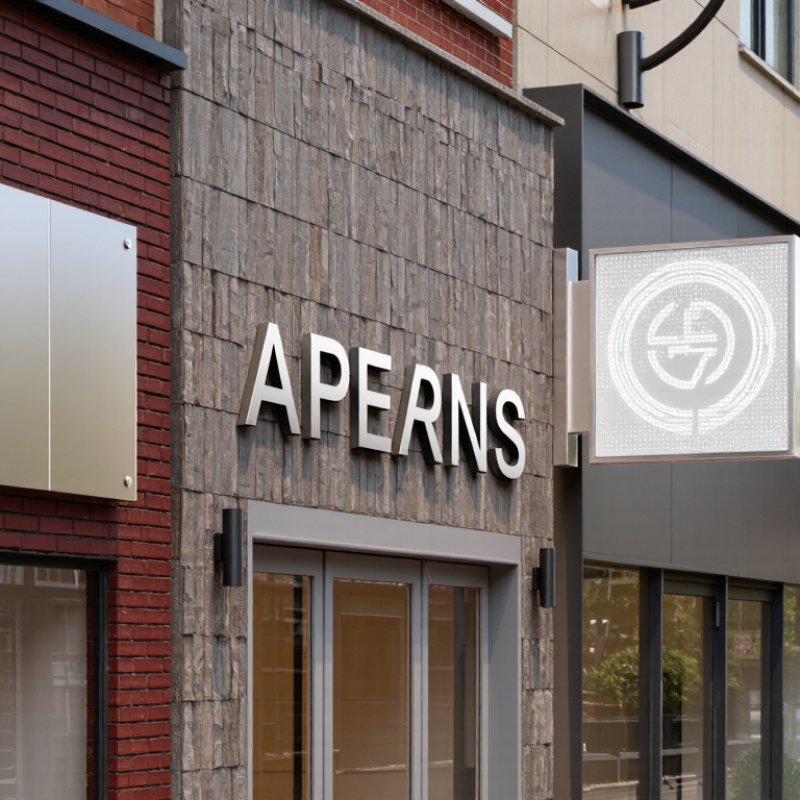
What Are the 2026 Best Wall Mounted Business Signs?
What Makes a Wall Mounted Business Sign Effective in 2026?
An effective wall mounted business sign communicates one clear idea within a few seconds. Research matters. A 2012 FedEx Office consumer survey reported that 76% of people entered a store because its sign attracted attention. The same study found that 68% made purchases after seeing business signage. These figures are older, so they should not guide every modern decision. Still, they show why visibility remains commercially important.
The strongest 2026 signs balance readability, durability, and visual restraint. Use large lettering, strong contrast, and generous spacing. A customer should read the main message from the sidewalk, not from directly beneath the sign. Keep it simple. Indoor lighting, weather exposure, wall texture, and viewing distance all affect performance. The Sign Research Foundation also emphasizes that on-premise signs support discovery, navigation, and brand recognition. In practice, a sign should help people feel oriented, not overwhelmed.
Materials should match the building and maintenance schedule. Powder-coated metal, acrylic, and sealed wood can work well when installed correctly. However, no material is perfect. Cheap finishes may fade, while overly polished surfaces can create glare. Check local size, mounting, accessibility, and safety requirements before production. Test the design at different distances and during evening hours. A beautiful sign that cannot be read is still a weak sign.
Clear letter sizing, strong contrast, suitable illumination, weather-resistant materials, and unobstructed placement remain key factors in wall-mounted business sign performance. The chart uses a common planning guideline of approximately 1 inch of letter height for every 10 feet of viewing distance.
Use these values as an initial planning reference. Local sign regulations, viewing conditions, traffic speed, lighting, and surrounding visual clutter should be reviewed before production.
The 2026 best wall mounted business signs depend on location, viewing distance, and customer expectations. A flat panel sign suits offices, studios, and professional services. It offers a clean surface for names, directions, and opening hours. Dimensional letters create stronger depth for boutiques, salons, and modern restaurants. Their shadows can make a wall feel more memorable.
Illuminated cabinet signs work well for businesses serving customers after dark. They provide readable contrast near busy streets or building entrances. A projecting wall sign extends outward and helps pedestrians notice shops from the sidewalk. Clinics may prefer restrained lettering and clear directional panels. Retail stores often need larger graphics with simple wording. In practice, the perfect type is not always obvious. A beautiful sign can still fail if trees, parked cars, or poor lighting hide it.
Tips: View the proposed sign from the road and sidewalk before ordering. Check wall strength, lighting performance, weather resistance, and local installation requirements. Use high-contrast colors and readable letter spacing. Keep the message short. I have seen businesses overfill small panels with details, then regret the weak visibility. Request a scaled drawing and inspect material samples in daylight. Also review the sign at night, because colors and glare can change significantly. A small mistake here becomes expensive once drilling begins.
Choosing a wall mounted business sign starts with the building, not a catalog. Aluminum composite panels offer a clean appearance and resist moisture, while stainless steel suits modern entrances. Acrylic creates bright, crisp lettering, but it can show scratches more easily. Natural wood adds warmth, although it needs regular sealing outdoors. From installation experience, the best material matches the wall surface, weather exposure, and maintenance budget.
Size should reflect viewing distance and wall proportions. A sign that looks impressive indoors may disappear across a busy street. Measure the entrance, nearby windows, and the expected viewer position. Keep lettering simple enough to read within a few seconds. Oversized signs can feel aggressive, while undersized signs lose authority. My first layout is rarely perfect; a printed wall mockup often reveals awkward spacing.
Lighting controls visibility after sunset. Front-lit letters work well for strong contrast, while halo lighting creates a softer edge around raised characters. Use even illumination and avoid glare near apartment windows or traffic routes. Neutral white light usually keeps colors believable. Dark letters on a light wall, or light letters on a dark wall, improve recognition. Test the sign at noon, dusk, and in rain. That step is easy to skip, and regrettable. Mount the sign where pedestrians can see it without looking upward too far, while checking structural support and local installation requirements.
The best wall mounted business signs in 2026 combine clear branding with practical intelligence. Smart LED systems can adjust brightness according to daylight, reducing glare during evening hours. Remote monitoring can report power problems before a dark sign confuses customers. Some systems also use motion sensors, but constant animation may feel distracting rather than helpful. Less can be more.
Design trends are moving toward dimensional lettering, soft illumination, and restrained color palettes. Brushed metal, textured acrylic, and recycled materials add tactile interest without overwhelming a storefront. High contrast remains essential for quick reading from across a street. Designers are also creating modular signs, allowing panels or lettering to change when services change. This reduces replacement waste and supports long-term business planning.
In my experience, the strongest sign begins with visibility, not decoration. A readable typeface, balanced spacing, and carefully tested lighting matter more than flashy effects. Weather-resistant housings, sealed connections, and accessible maintenance points improve reliability in rain, dust, and temperature changes. However, predictive controls and connected features can introduce extra costs and technical problems. That trade-off deserves honest review. A sign may look advanced while creating avoidable maintenance work. Businesses should test viewing distance, nighttime brightness, installation height, and local accessibility needs before approving the final design.
| Sign Type | Best Business Setting | Typical Visibility | Lighting Option | Smart Features | Weather and Safety Considerations | 2026 Design Direction | Overall Fit |
|---|---|---|---|---|---|---|---|
| Illuminated Cabinet Sign | Retail storefronts, restaurants, clinics, and offices requiring strong brand visibility. | High visibility from passing vehicles and pedestrians, especially after dark. | Internal LED modules with translucent acrylic or polycarbonate face. | Programmable brightness, dusk-to-dawn photocell, timer control, energy monitoring, and fault alerts. | Use sealed electrical components, protected cable entries, and an enclosure suited to the local outdoor exposure. | Slimmer boxes, flush faces, refined edge detailing, and lower-energy illumination. | Excellent |
| Halo-Lit Dimensional Letters | Professional services, hospitality, premium retail, and contemporary office entrances. | Moderate to high visibility; strongest in evening conditions and close pedestrian areas. | LED light projected behind individually mounted letters. | Dimming schedules, occupancy-linked lighting, remote status checks, and scene presets. | Mounting depth, wall condition, drainage, and concealed wiring must be assessed before installation. | Quiet luxury, brushed or matte finishes, generous spacing, and soft indirect light. | Excellent |
| Front-Lit Channel Letters | Shopping streets, mixed-use developments, entertainment venues, and high-traffic façades. | High visibility across a broad viewing angle when letters have adequate height and contrast. | LED illumination through acrylic letter faces. | Remote brightness adjustment, astronomical timers, energy-use reporting, and maintenance alerts. | Use outdoor-rated components and allow access for LED or power-supply servicing. | Custom typography, high-contrast palettes, restrained illumination, and recyclable face materials. | Excellent |
| Projecting Blade Sign | Businesses on pedestrian streets, corner properties, and buildings with limited frontal visibility. | High visibility to people approaching along the sidewalk; limited benefit for distant drivers. | Edge-lit, face-lit, or non-illuminated construction. | Low-power LED scheduling, brightness control, and optional sensor-based operation. | Verify structural fixing, wind exposure, clearance above walkways, and local projection rules. | Compact vertical formats, double-sided messaging, and architectural metal finishes. | Very Good |
| Digital LED Information Panel | Service businesses, campuses, venues, and locations that need changing information. | High attention value when content is concise and contrast is appropriate for the viewing distance. | Direct-view LED display with automatic brightness adjustment. | Cloud content management, scheduled messaging, remote diagnostics, accessibility-focused contrast, and emergency updates. | Require suitable ventilation, surge protection, secure network access, and an enclosure designed for outdoor conditions. | Short-form content, motion restraint, real-time information, and reduced visual clutter. | Very Good |
| Architectural Plaque Sign | Law offices, medical practices, hotels, heritage properties, and reception entrances. | Low to moderate visibility; designed primarily for pedestrians and visitors nearby. | Non-illuminated, halo-lit, or discreetly spotlighted. | Optional low-power occupancy lighting, QR-linked visitor information, and digital directory integration. | Choose corrosion-resistant materials and secure fixings appropriate to the wall substrate. | Minimal layouts, tactile lettering, durable natural textures, and accessible information hierarchy. | Good |
| Wayfinding and Directory Sign | Office buildings, healthcare facilities, campuses, shopping centers, and shared developments. | Moderate visibility at decision points; effectiveness depends on placement and legibility. | Non-illuminated, internally illuminated, or edge-lit panels. | Digital directory updates, QR navigation, multilingual content, and centralized content control. | Use glare-resistant surfaces, readable type sizes, tactile elements where required, and clear mounting heights. | Universal icons, inclusive navigation, modular panels, and consistent information systems. | Excellent |
| Sustainable Timber or Recycled-Material Sign | Hospitality, wellness, food service, local retail, and environmentally focused businesses. | Moderate visibility, with visual impact driven by texture, contrast, and placement. | Low-voltage LED accents, halo lighting, or non-illuminated finish. | Lighting timers, energy monitoring, material documentation, and maintenance reminders. | Specify certified or traceable materials, protective coatings, moisture control, and suitable fire performance. | Biophilic textures, repairable components, low-impact finishes, and material transparency. | Good |
| Hybrid Static-Digital Sign | Retail, hospitality, transport-adjacent sites, and businesses combining permanent identity with changing offers. | High visibility when static lettering provides recognition and digital content adds timely information. | LED letters paired with a compact digital display or electronic panel. | Remote scheduling, content approvals, brightness automation, analytics, and maintenance notifications. | Separate electrical circuits where appropriate, protect network equipment, and control screen brightness responsibly. | Balanced compositions, limited motion, responsive campaigns, and clearer separation of information levels. | Excellent |
Planning note: Visibility, electrical requirements, mounting methods, illumination levels, accessibility, and permitted sign dimensions vary by site and jurisdiction. Final specifications should be confirmed through a local site survey and applicable building, electrical, accessibility, and sign regulations.
In 2026, the best wall mounted business signs combine clear lettering, durable materials, and careful installation. A sign should remain readable from the sidewalk, even under rain or evening glare. Measure the wall, viewing distance, doorway height, and nearby lighting before choosing its size.
Professional installers should check the wall structure, fastener type, electrical access, and weather exposure. Brick, concrete, and cladding each require different mounting methods.
I once underestimated wind pressure on a broad sign panel. That mistake required extra brackets later.
Local signage requirements can affect dimensions, colors, illumination, placement, and permits. Rules may differ between cities, districts, and building types. Ask the local planning office or property manager for current guidance before fabrication.
Keep approval documents, drawings, and installation records together. Maintenance also needs a schedule. Inspect fasteners, seams, wiring, drainage points, and surface fading at least twice yearly. Clean gently with water and a non-abrasive cloth. Harsh chemicals can damage finishes.
Not every maintenance plan works equally well in coastal or high-traffic areas.
Photograph the wall before installation. Confirm who handles permits and repairs. Leave access around electrical components. Test nighttime visibility from the actual pedestrian path. Replace cracked panels quickly. Small defects become expensive. Review the sign after its first severe weather event, then revise the maintenance schedule if needed.
It communicates one clear idea within a few seconds. Large letters, strong contrast, and generous spacing improve quick reading. Keep it simple.
Customers should read the main message from the sidewalk or nearby road. Test the design at several distances. Do not judge it only from beneath the wall.
A flat panel sign usually works well for offices and studios. It can display the name, directions, and opening hours. Restrained lettering often feels appropriate.
Dimensional letters suit boutiques, salons, and modern restaurants. They create shadows and visual depth on the wall. However, attractive depth cannot fix poor visibility.
Powder-coated metal, acrylic, and sealed wood can perform well outdoors. The building style and maintenance schedule should guide the choice. Cheap finishes may fade.
Yes, especially near busy streets and building entrances. Soft, even lighting improves contrast without overwhelming pedestrians. Check brightness at night, because glare can change the result.
Smart lighting can adjust brightness and report power problems remotely. Motion sensors may help in limited situations. Constant animation can distract customers. Less can be more.
View a scaled drawing from the road and sidewalk. Inspect material samples in daylight. Review colors, glare, and lettering after sunset. Test it twice.
Overfilled panels, small lettering, weak contrast, and hidden placement cause problems. Trees, parked cars, and poor lighting can block the message. I may underestimate how often this happens.
Check wall strength, mounting points, weather resistance, wiring, and local installation requirements. Confirm accessibility and safety needs. A small mistake becomes expensive later.
In 2026, the best Wall Mounted Business Signs combine clear messaging, strong visual appeal, and practical performance. An effective sign should reflect the business identity, remain easy to read from a suitable distance, and work well with the surrounding architecture. Different businesses may benefit from dimensional lettering, panel signs, illuminated displays, projecting signs, or custom designs. Choosing the right material, size, color contrast, lighting, and placement is essential for improving visibility during both daytime and evening hours.
Modern signage is also becoming smarter and more adaptable. Energy-efficient lighting, digital elements, weather-resistant materials, and clean, minimal designs can help businesses stay attractive and relevant. Before installation, owners should consider wall structure, mounting methods, maintenance needs, safety, and local signage requirements. Regular cleaning, lighting checks, and timely repairs will preserve the sign’s appearance and reliability, helping it continue to attract attention and support a professional customer experience.

Kexian